
Pre-engineered FRP Pedestrian Bridges:
Frequently Asked Questions
Whether you’re a government official, architect, engineer, contractor or trail builder exploring pre-engineered fiberglass-reinforced polymer (FRP) pedestrian bridges, this FAQ covers the most common questions our team receives. From design and performance to installation, customization and more, you’ll find practical answers to help you confidently select the right Bedford FRP pedestrian bridge for your project.
Where are Bedford FRP pedestrian bridges manufactured?
+Bedford’s pre-engineered FRP pedestrian bridges are proudly manufactured in Pennsylvania, USA. Bedford handles the process in-house, with capabilities spanning design and engineering, manufacturing and production, fabrication, assembly, testing and shipping. This integrated approach helps Bedford maintain control over quality throughout the process while delivering dependable, American-made bridge solutions.
What are Bedford pedestrian bridges made of?
+Bedford pedestrian bridges are constructed primarily from high-strength fiberglass-reinforced polymer (FRP), a lightweight, durable material that resists rot, rust, corrosion, warping and damage from harsh weather. Decking options include pressure-treated southern yellow pine or low-maintenance FRP decking, depending on your application and performance requirements.
What are the benefits of FRP pedestrian bridges?
+FRP pedestrian bridges offer a strong, lightweight and low-maintenance alternative to traditional bridge materials like wood or metal. Their corrosion-resistant construction won’t rot, rust, warp or attract insects and stands up to harsh weather, saltwater and other demanding conditions. Because FRP is lightweight, bridge components are also easier and more cost-effective to transport, especially to remote or difficult-to-access sites, and can be assembled using standard tools.
Together, these advantages can help reduce installation and maintenance requirements while providing dependable, long-lasting performance.
For additional details, explore our Pre-Engineered FRP Pedestrian Bridges brochure.
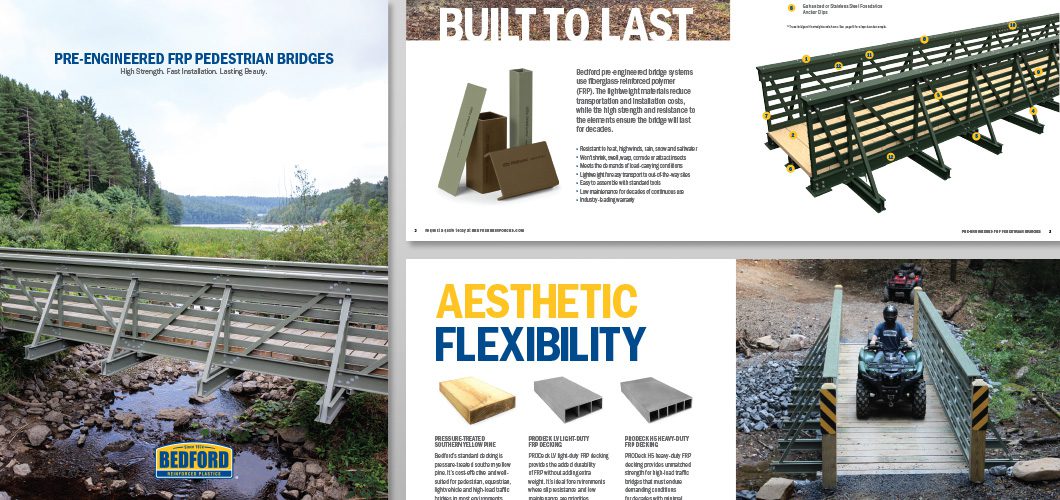
How do FRP bridges compare to wood and metal bridges?
+Compared with wood and metal bridges, FRP bridges provide similar strength with greater resistance to many of the conditions that can shorten a bridge’s service life. FRP won’t rot like wood or rust and corrode like steel, and it stands up to harsh weather, moisture, saltwater, chemicals and insects.
FRP is also lightweight, making bridge components easier and more cost-effective to ship, transport and install — particularly in remote or difficult-to-access locations. And because FRP requires minimal maintenance, it can provide long-lasting performance without the upkeep commonly associated with traditional bridge materials.
Learn more about how FRP compares to traditional materials.
Where are FRP pedestrian bridges used?
+FRP pedestrian bridges are well suited for a wide range of applications, including state and local parks, hiking and biking trails, ATV and equestrian trails, golf courses and other recreational or public spaces. They can be used for both new bridge installations and to replace aging bridges made from traditional materials.
Their lightweight, corrosion-resistant construction also makes FRP bridges a strong choice for remote or difficult-to-access sites and locations exposed to challenging environmental conditions, including coastal environments, heavy snow, high winds and seismic activity.
Explore typical FRP pedestrian bridge applications, learn how Bedford bridges are designed to meet severe weather challenges and view pedestrian bridge projects for real-world examples.
What FRP pedestrian bridge spans and widths are available?
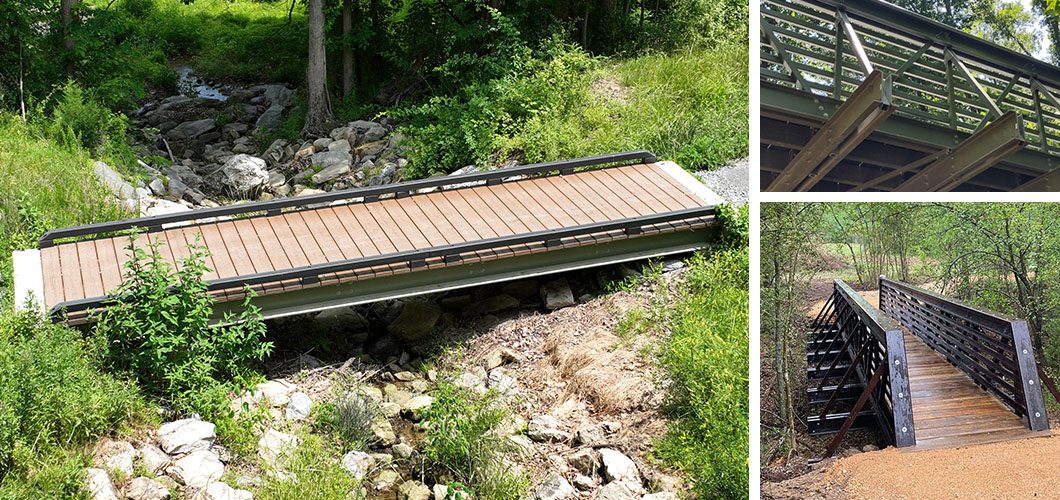
+Bedford pre-engineered FRP pedestrian bridges are typically available in spans from 10′ to 100′ and interior widths from 3′ to 6′, with design load ratings of 60–85 PSF uniform live load.
For applications that need to accommodate equestrian traffic, light vehicles such as ATVs, UTVs or golf carts, or a single H5 emergency vehicle, bridges are available in spans from 10′ to 100′ and interior widths from 7′ to 10′. These configurations are rated for a 60 PSF uniform live load and a single 10,000-pound H5 emergency vehicle load.
For longer crossings, multiple bridge units can be combined with additional supports.
Click here for more information or to request a quote.
Can FRP pedestrian bridges support a vehicle?
+Bedford FRP pedestrian bridges can be configured to accommodate more than pedestrian traffic. Options are available for equestrian use and light vehicles, including ATVs, UTVs and golf carts. Select configurations can also support a single 10,000-pound H5 emergency vehicle load.
To validate this capability, Bedford worked with West Virginia University to conduct full-scale, real-world testing of a 100′ x 10′ FRP bridge designed for a single H5 emergency vehicle — giving engineers performance data they can rely on when specifying a bridge for demanding applications.
What FRP pedestrian bridge design options are available?
+Bedford pre-engineered FRP pedestrian bridges are available in truss and wide-flange beam designs to accommodate different applications and site requirements. Truss bridges can be configured with straight or sloped ends, while wide-flange beam bridges are available with railings or curbing.
Additional options allow you to tailor the bridge to its use and surroundings, including brown or green structural materials and a variety of decking options. Hardware options include hot-dipped galvanized or stainless-steel components.
For detailed design requirements, review Bedford’s Truss Bridge Specifications or Wide-Flange Beam Bridge Specifications.
What colors are available for Bedford FRP pedestrian bridges?
+Bedford FRP pedestrian bridge structural materials are available in olive green or brown, providing versatile options that complement a variety of natural and built environments. The color is integrated throughout the material, so it won’t fade over time and helps the bridge maintain its appearance with minimal maintenance.
To see the colors, check out our pedestrian bridge brochure.
What decking options are available for Bedford FRP pedestrian bridges?
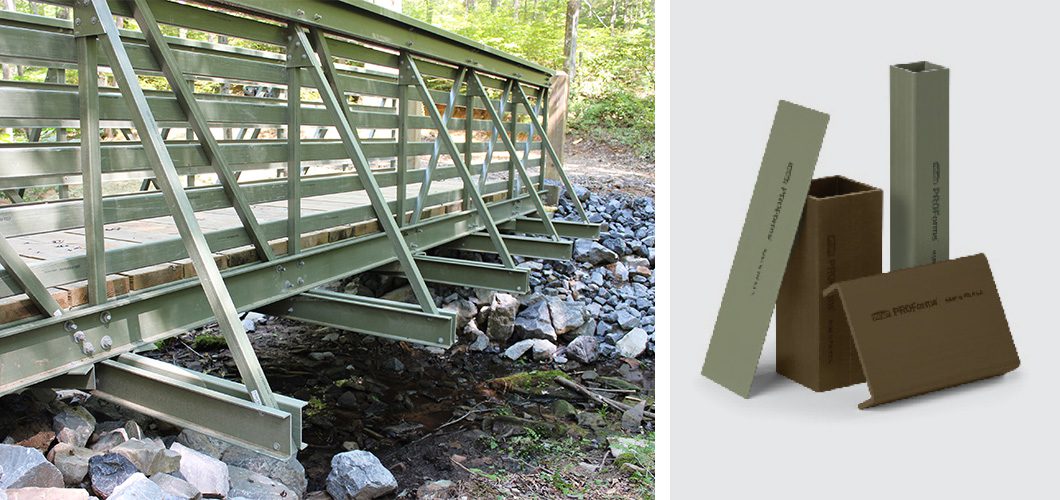
+Bedford offers several decking options to match different applications, performance requirements and maintenance needs:
- Pressure-treated southern yellow pine: A cost-effective standard option well suited for pedestrian, equestrian, light vehicle and high-load traffic bridges in most environments.
- PRODeck LV light-duty FRP decking: A lightweight, durable option ideal for applications where slip resistance and low maintenance are priorities.
- PRODeck H5 heavy-duty FRP decking: Engineered for high-load traffic and demanding conditions, with the strength and durability to provide decades of performance with minimal maintenance.
ADA-compliant HD fiberglass decking is also available for applicable bridge configurations.
Learn more about choosing the right decking for your pedestrian, equestrian or light vehicle bridge.
How much does an FRP pedestrian bridge cost?
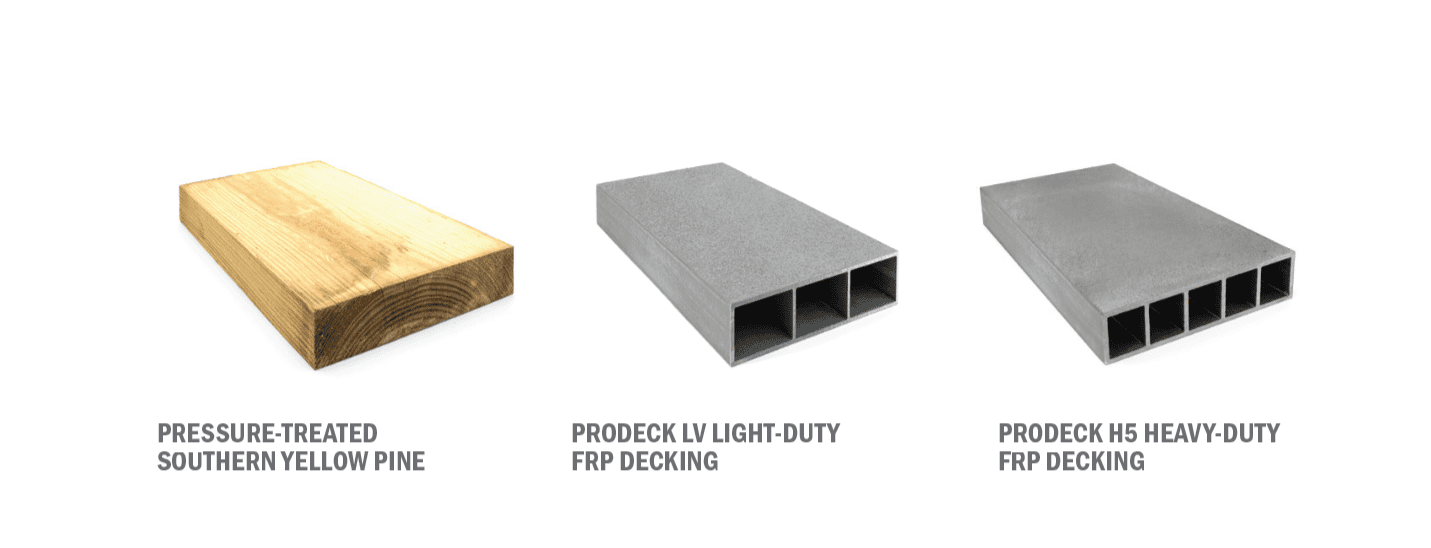
+The cost of an FRP pedestrian bridge varies based on factors such as span length, bridge width, decking material, load requirements, design configuration and level of assembly. FRP’s lightweight construction can help reduce transportation and installation costs compared with heavier traditional materials.
Because every bridge project has different requirements, request a quote from Bedford for pricing based on your specific application.
What are shipping costs for an FRP pedestrian bridge?
+Shipping costs for an FRP pedestrian bridge depend on factors such as your location, bridge size and shipping configuration. Because FRP is lightweight, it can help reduce shipping costs and makes bridge components easier to transport to remote or difficult-to-access sites.
Bedford bridges can be shipped as kits for field assembly, partially assembled for faster installation or fully assembled and ready to be placed into position. Contact our team or call 814-623-8125 for a shipping estimate based on your project and location.
How do I request a quote or more information for a Bedford FRP pedestrian bridge?
+To get started, request a quote or more information online or call Bedford at 814-623-8125 to discuss your project.
Whether you already have a bridge design or need assistance developing one, Bedford’s experienced team can provide design and engineering services, including drafting, 3D modeling, structural analysis and P.E. sealed submittal packages. Bedford can also help guide you through the process from design and engineering through manufacturing and installation.
For a closer look at what to expect, explore the pedestrian bridge purchase and implementation process.
What is the lead time from order to delivery for a Bedford FRP pedestrian bridge?
+Because every bridge project is different, lead times are determined on a project-by-project basis. In general, most Bedford FRP pedestrian bridges are built and shipped within 90 days or fewer. Your project estimate will include specific scheduling information from order through delivery.
From ordering through installation, FRP bridges also typically offer a shorter timeframe than steel bridges, helping projects move from planning to completion faster.
Do Bedford FRP pedestrian bridges arrive assembled?
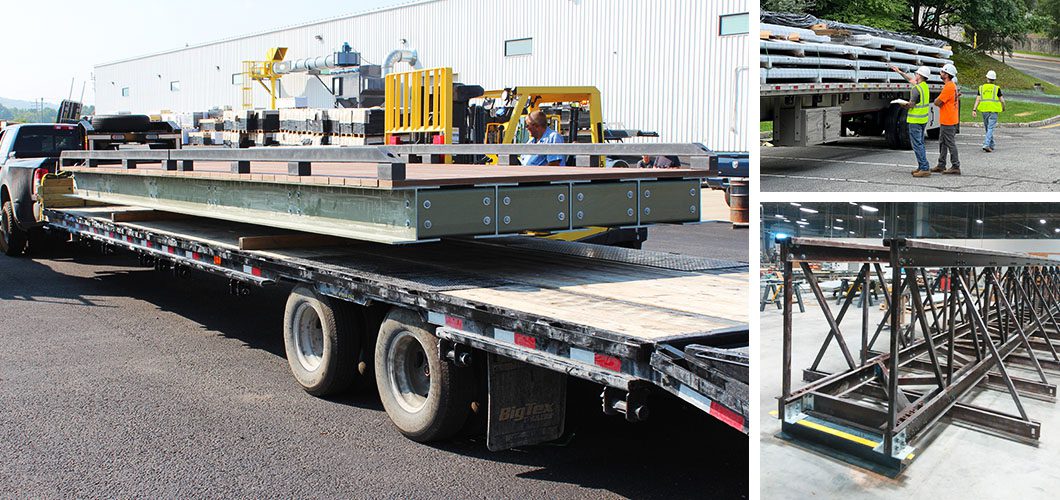
+Bedford FRP pedestrian bridges can be shipped fully assembled, partially assembled or as a kit for complete assembly in the field, depending on your project needs and site accessibility. Many customers choose unassembled or partially assembled components because these options can be more cost-effective to ship and make it easier to transport materials to remote or difficult-to-access sites.
All Bedford bridges include assembly instructions, and their lightweight FRP components can be assembled using standard tools — with no welding or hot work permits required.
Can an FRP pedestrian bridge be built in place?
+Yes. FRP pedestrian bridges shipped as kits or partially assembled can be built on site using standard tools, with no hot work permits or welding required. Bridge components are purposely lightweight so they can be easily hand-carried to the jobsite when needed. The heaviest individual component typically weighs less than 125 pounds, with most weighing much less. Every bridge also comes with detailed assembly instructions to help simplify onsite installation.
Do I need a crane to set my FRP pedestrian bridge?
+Only if your bridge ships fully assembled. In that case, it arrives complete and must be lifted into position, which typically requires a crane. Bridges shipped as kits or partially assembled can be built in place without one.
Does Bedford install FRP pedestrian bridges?
+No, Bedford does not install pedestrian bridges. However, we can recommend partners or contractors with experience installing FRP bridge systems. Pedestrian bridges are also designed for straightforward installation using standard tools, and bridges can be shipped fully assembled if needed. Contact us to discuss the best installation approach for your project.
Are drawings included with my Bedford FRP pedestrian bridge?
+Yes. Drawings are included with your bridge and stamped (provided upon request for an additional charge) by a licensed professional engineer (P.E.), providing the documentation needed for permitting and review.
Does my FRP pedestrian bridge include abutments or foundations?
+No. Abutments and foundations are not included with Bedford FRP pedestrian bridges and must be provided as part of site preparation. Bedford can make recommendations to help guide this work, and every bridge includes galvanized or stainless-steel foundation anchor clips for securing the structure to the supports.
When should stainless-steel fasteners be used on an FRP pedestrian bridge?
+Stainless-steel fasteners and hardware are available as an upgrade to standard galvanized steel hardware. They provide enhanced corrosion protection and are ideal for marine and other particularly wet environments.
Can my FRP pedestrian bridge design include a camber?
+Yes. A camber can be incorporated into the bridge design to help offset the dead weight of the bridge itself. Arched bridge designs are not available.
What is the recommended safety spacing for midrails on a Bedford FRP pedestrian bridge?
+While there is no government standard specifically for trail and park bridges, Bedford offers horizontal safety midrails with 4″ spacing. This spacing aligns with the maximum allowed by government standards for railings and stairways.
Can you design an FRP pedestrian bridge that works on a sloped site?
+Yes. Varying elevations are common, and Bedford can work with you to assess your site conditions and recommend bridge design options that meet your project needs.
What maintenance is required for a Bedford pedestrian bridge?
+Bedford FRP pedestrian bridges require minimal routine maintenance. You may need to occasionally remove leaves, limbs or other debris, but the FRP structure itself is long-lasting and virtually maintenance-free. The top cap is coated with our proprietary ReadyShield UV-resistant coating to prevent color fading due to prolonged exposure to sunlight. An FRP channel topcoat with a painted finish provides additional UV protection.
How long does a Bedford pedestrian bridge last?
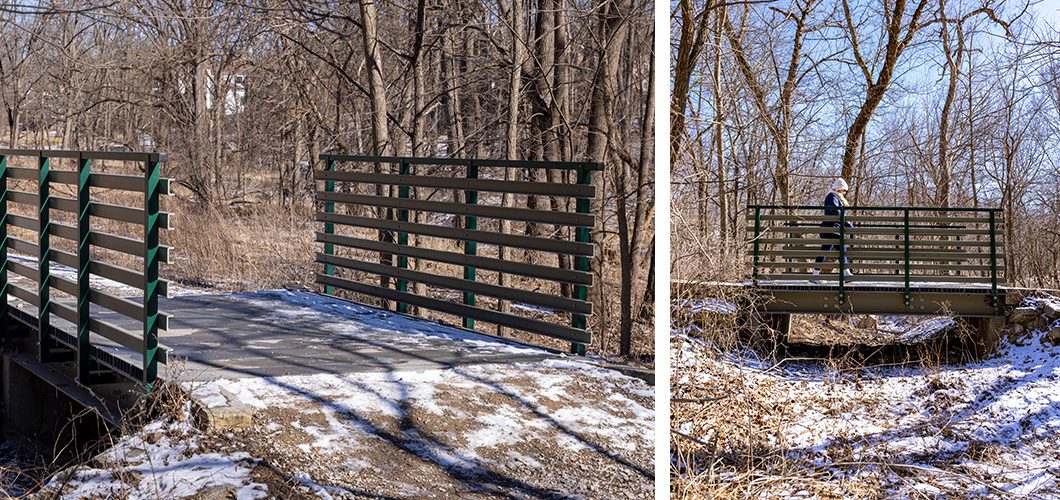
+Bedford FRP pedestrian bridges are engineered for decades of continuous use. Based on testing and the proven performance of FRP materials worldwide, Bedford pedestrian bridges have an estimated service life of approximately 75 years — even in harsh conditions.