
FRP Grating:
Frequently Asked Questions
Whether you’re new to fiberglass-reinforced polymer (FRP) grating or looking for technical details to support your next project, this FAQ covers the most common questions our team receives. From performance and safety to sizing, installation and more, you’ll find practical answers to help you confidently select and work with Bedford’s industry-leading FRP grating products.
What is fiberglass grating?
+Fiberglass grating — also known as FRP grating — is a lightweight, high-strength material made from fiberglass-reinforced plastic. It’s manufactured either by molding or pultruding into a rigid grid that offers excellent ventilation and drainage. Designed for both foot traffic and light vehicle loads, FRP grating delivers slip resistance, corrosion resistance and structural reliability in demanding environments.
Learn more about the safety and performance benefits of FRP grating in our article and video: Trust Safety and Productivity to Bedford FRP Grating.
Where can fiberglass grating be used?
+Fiberglass grating is commonly used in industrial and commercial environments that require durable, corrosion-resistant and slip-resistant surfaces. It’s ideal for floor systems, elevated walkways, work platforms, stairs, ramps, catwalks, trench covers and more. FRP grating can be installed in both new construction and retrofit projects — whether to meet safety requirements, replace damaged materials, comply with OSHA standards or improve long-term performance in tough conditions.
FRP grating is available for a variety of applications and configurations in markets such as:
- Aerospace
- Breweries
- Chemical and food processing
- Data centers
- Distribution and warehousing
- Manufacturing
- Metals fabrication
- Mining
- Oil and gas
- Power generation
- Steel mills
- Wastewater and water treatment
Discover the top 10 most popular uses for Bedford’s fiberglass grating systems. Check out this FRP applications video to learn more.
Explore these projects to see Bedford FRP solutions used by a wide variety of customers. Your project could be featured in our showcase, too — submit details here!
What’s the difference between molded and pultruded fiberglass grating?
+Both molded and pultruded FRP grating offer a strong, lightweight and corrosion-resistant alternative to steel for applications such as floor systems, walkways, stairs, ramps, platforms, trench covers and catwalks. They’re nonconductive, fire- and moisture-resistant, easy to install and low maintenance. But while they share many benefits, there are key differences in how they’re manufactured — and how they perform.
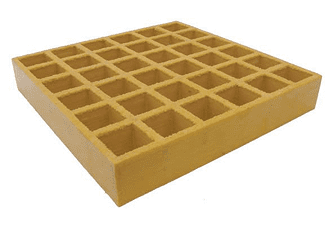
Molded FRP Grating
Molded grating is cast as a single piece — typically in a square mesh pattern — which gives it excellent bi-directional strength. It’s flexible, impact resistant and often preferred in environments with corrosive exposure. Molded grating is also available with slip-resistant surfaces or covered panels to improve safety and containment.
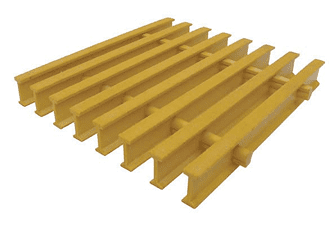
Pultruded FRP Grating
Pultruded grating is made with continuous fiberglass rovings formed into parallel bearing bars and cross-rods. It delivers high strength in one direction and excels in supporting heavy loads and long spans. It’s stiffer and stronger than molded grating, making it ideal for demanding structural applications.
Key Differences: At a Glance
- Manufacturing Method: Molded panels are created in one piece; pultruded grating uses shapes that are fabricated into panels.
- Strength Direction: Molded offers bi-directional load capability; pultruded supports higher loads in one direction.
- Flexibility vs. Rigidity: Molded grating provides more flexibility and impact resistance; pultruded grating is stiffer and better for spanning larger distances.
- Best Use: Choose molded for when more support flexibility is required in the installation environment; choose pultruded for structural areas requiring longer spans and high strength.
Watch the video below for a more comprehensive comparison of these two types of grating.
Regardless of type, both molded and pultruded FRP grating offer superior performance over traditional materials like steel. The best choice depends on your specific application — contact us to discuss the right solution for your needs.
How is fiberglass grating made?
+Fiberglass grating is manufactured using two different processes — molding and pultrusion — each with its own process, performance characteristics and end-use applications.
The Molding Process: How Molded Grating Is Made
Molded grating is created by layering liquid resin and continuous fiberglass rovings into a mold. These layers are built up until the panel reaches the desired thickness and size. The mold is then set aside to cure, after which the finished grating panel is removed.
Bedford’s precise quality control ensures that every molded panel meets strict performance standards. With a high resin-to-glass ratio (approximately 65% resin to 35% glass by weight), molded grating offers long service life even in highly demanding environments.
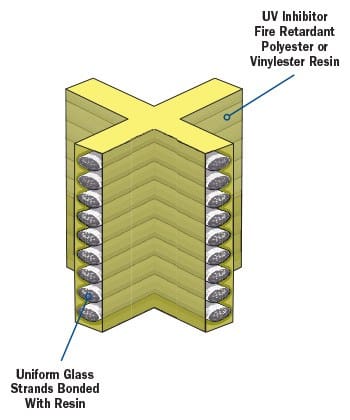
The Pultrusion Process: How Pultruded Grating Is Made
Pultruded grating is produced through a continuous, multi-step process that creates strong, consistent bearing bars and cross-rods, which are later assembled into grating panels.
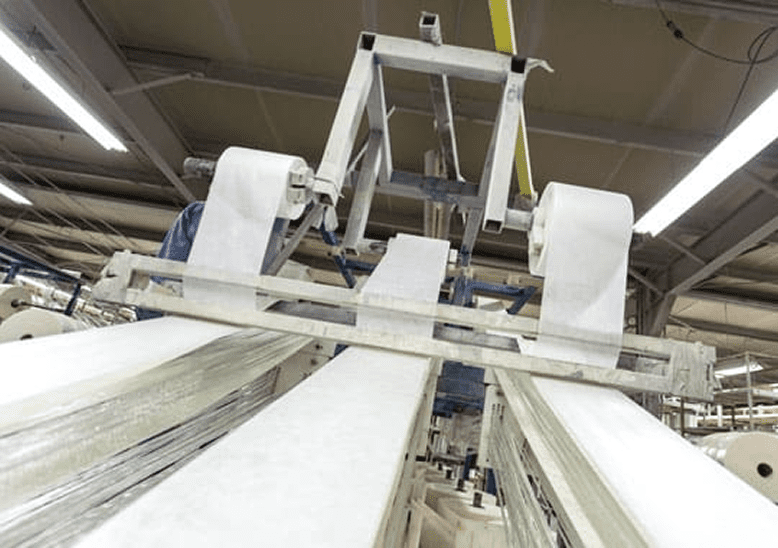
Step 1: Reinforcement
Fiberglass reinforcement begins with two forms of material: creels of fiberglass roving for unidirectional strength and rolls of woven fiberglass mat for multidirectional reinforcement. These materials are fed through preforming guides that begin shaping the final bar profile.
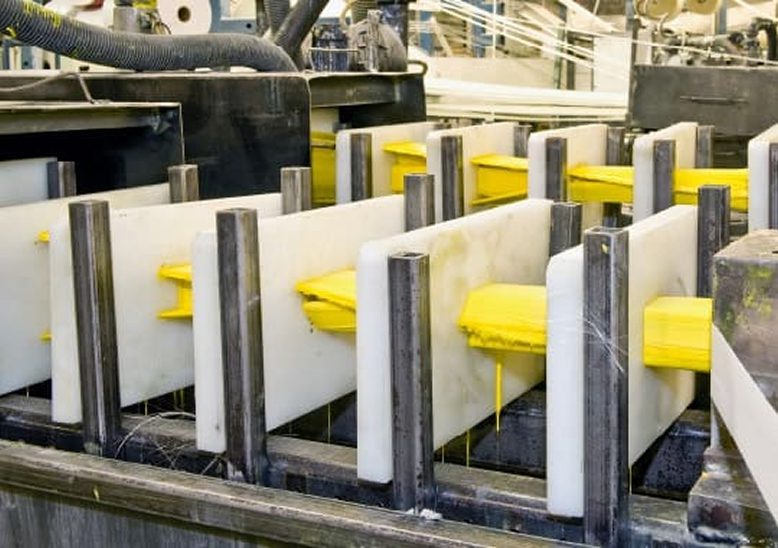
Step 2: Impregnation and Resin Bath
The fibers are then pulled through a bath of thermoset resin (typically polyester or vinylester), which includes pigments, fillers and additives for color and enhanced performance. This “wet-out” process binds and protects the fibers while aiding in corrosion and UV resistance.

Step 3: Surface Veil
A surface veil — lightweight polyester fabric — is added before entering the heated die. This creates a smooth, durable, resin-rich outer layer that improves chemical and environmental resistance.
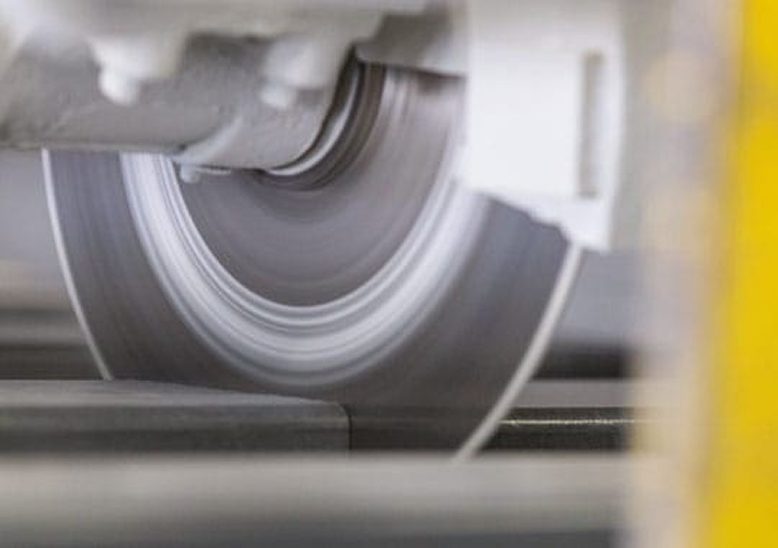
Step 4: Curing and Cutting
The soaked fiberglass materials are pulled through a heated die that cures the resin, forming a solid T- or I-shaped bearing bar. The cured profile is then pulled to a cut-off saw and trimmed to length.
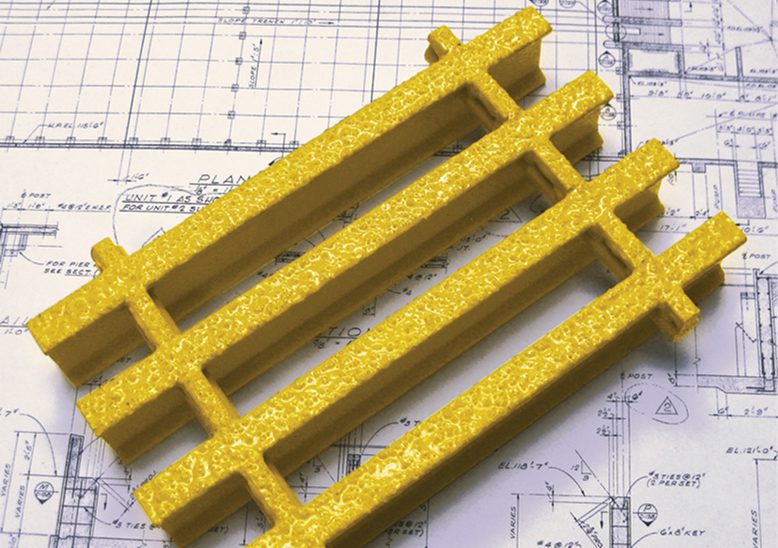
Step 5: Assembly
Finally, holes are drilled every six inches along the bearing bars, and cross-rods are inserted perpendicularly and secured with epoxy to complete the panel structure.
How can I determine which type of grating is best for my project?
+Choosing the right fiberglass grating depends on your specific application, load requirements, environmental conditions and safety needs. Get started in the way that’s most convenient for you:
- Reach out to our team for expert guidance
- Review the product page to compare grating options
- Use our helpful guide: How to Select the Right FRP Grating
These resources will walk you through the key considerations for selecting molded vs. pultruded grating, surface types, panel sizes and more.
How can I order grating?
+Ordering fiberglass grating from Bedford is easy and straightforward. You can:
- Request a quote
- Call our team for assistance at 814-623-8125
- Check current inventory
- Apply for credit
Our team is ready to help you get the right grating for your timeline and application.
Can grating be cut into smaller sections once it’s delivered?
+Yes. One of the key advantages of FRP grating is its versatility in the field. Panels can be cut and drilled on-site using standard tools, making it easy to modify grating to fit your space, accommodate obstructions or create custom layouts. This flexibility simplifies installation and minimizes delays.
For cutting tips and tool recommendations, watch the following video:
How do you cut fiberglass grating?
+Fiberglass grating can be cut on-site using standard tools, making it easy to modify panels as needed during installation. To ensure clean, safe cuts, follow these best practices:
Recommended Tools & Techniques
- Use a handheld circular saw for most straight cuts
- For smaller or thinner grating profiles, a mini circular saw works well
- Always use a diamond-coated saw blade — FRP is highly abrasive and will quickly dull standard blades
- Apply light, even pressure while cutting
- Avoid cutting too quickly, which can fray the edges or clog the blade
- Support the grating from underneath to prevent shifting and minimize chipping
Safety Precautions
- Always wear eye protection
- Use hearing protection and gloves
- Be prepared to sharpen or clean blades frequently due to abrasive wear
Cutting FRP grating is a straightforward process, but following the right steps helps ensure quality results and a safe work environment.
Watch our short video for a demonstration:
What colors does fiberglass grating come in?
+Color isn’t just about looks — selecting the right color can help improve visibility, enhance safety or complement the overall design of a structure. With fiberglass grating, color is integrated during manufacturing, so it won’t fade, peel or require repainting like coated steel.
Bedford’s fiberglass grating is available in a range of standard colors, depending on the product type:
- PROGrid® molded grating: Green, Yellow, Dark Gray, Light Gray and Orange
- PROGrate® pultruded grating: Yellow and Gray
You can view available colors at the top of each product page: PROGrid and PROGrate.
What sizes of grating panels are available?
+Grating panel sizes vary depending on the product type — PROGrid molded grating or PROGrate pultruded grating.
PROGrid available panel sizes:
- 3′ wide x 10′ long
- 3′ wide x 12′ long
- 4′ wide x 8′ long
- 4′ wide x 12′ long
- 5′ wide x 12′ long
- 12′ wide x 4′ long
- 10′ wide x 3′ long
PROGrate available panel sizes:
- 3′ wide x 20′ long
- 3′ wide x 24′ long
- 4′ wide x 20′ long
- 4′ wide x 24′ long
Note: Dimensions are nominal. Not all panel sizes are stocked in every resin series or color. Check inventory for current availability. Browse the Grating Catalog for complete details.
Watch this video to learn more about Bedford’s FRP grating availability.
How is FRP grating installed?
+One of the key advantages of FRP grating is its ease of installation. Panels are designed to be lightweight and easy to handle, making them ideal for fast, on-site fabrication and installation with basic tools — no special equipment required.
Grating can be cut to size using standard circular saws with diamond-coated blades and installed using a combination of panel clips and mechanical fasteners, depending on the application. Because FRP is non-corrosive and dimensionally stable, installation doesn’t require welding, painting or heavy prep work like steel grating often does.
Installers typically:
- Cut panels to fit as needed
- Use appropriate hold-down clips to secure grating to the support structure
- Leave proper spacing between panels to accommodate thermal expansion
- Ensure proper support spans based on load requirements and grating type
Bedford’s FRP grating products are engineered to install quickly and stay securely in place — delivering long-term durability and low maintenance in even the most demanding environments.
How long does pultruded fiberglass grating last?
+Pultruded fiberglass grating is engineered for long service life — even in harsh, high-demand environments. Its high resin-to-glass ratio (approximately 65% resin to 35% glass by weight) provides excellent durability, corrosion resistance and structural integrity over time.
Unlike steel, FRP won’t rust, warp or degrade when exposed to moisture, chemicals or temperature fluctuations. That means less maintenance, fewer replacements and a lower total cost of ownership over the product’s life cycle.
With proper installation and routine inspection, Bedford’s pultruded grating can last for decades.
How much weight can a fiberglass grating walkway hold?
+The load capacity of fiberglass grating depends on the panel size, grating type (molded or pultruded), span length and support structure. In general:
- Molded grating can support pedestrian and light-duty traffic
- Pultruded grating offers higher load capacities, making it ideal for heavier traffic
For detailed load tables and span ratings, refer to the Grating Catalog or contact our team to discuss your specific application.
Can you customize grating for my project?
+Yes — within certain parameters. FRP grating can be customized to fit your project’s size, color and layout requirements using the available options in our product line. While full custom fabrication isn’t typical, panels can be:
- Cut to size in the field using standard tools
- Selected in various panel sizes and configurations
- Ordered in a range of standard colors
If you have a specific layout or non-standard application, contact us to discuss how our grating solutions can be tailored to meet your needs.
Are Bedford products OSHA-compliant?
+Yes. Bedford’s materials have always met or exceeded OSHA requirements, and our team stays up to date with evolving regulations to help ensure your project remains compliant. From slip resistance and structural integrity to proper railing design and fall protection, our FRP products are engineered with safety in mind.
To learn more, check out this article and video: Industrial Plant Safety Questions Answered by an FRP Expert.
Does fiberglass grating require any maintenance?
+FRP grating is inherently low maintenance — one of the key reasons it’s chosen over traditional materials like steel or wood. It’s built to withstand tough conditions without deteriorating over time.
Key performance benefits include:
- Corrosion resistance (no rusting or rotting)
- Fire retardance
- Dimensional stability (won’t expand or contract with temperature swings)
- No denting or warping
- UV resistance
- Low electrical conductivity
These properties reduce the need for painting, coating or frequent inspection — helping lower your total cost of ownership.
For more technical details, see our Grating Catalog.
What is the cost of FRP grating?
+The cost of FRP grating depends on several factors, including the panel type (molded or pultruded), resin series, panel size, color and quantity needed. Project-specific requirements such as cut-to-size panels or special coatings may also affect pricing.
To get accurate pricing tailored to your project, reach out to our team for a customized quote.
Is fiberglass grating better than steel grating?
+In many applications, yes. Bedford’s FRP grating offers significant advantages over traditional steel grating — especially in environments exposed to moisture, chemicals or corrosive conditions.
Key benefits of FRP compared to steel:
- Corrosion resistant — won’t rust when exposed to harsh weather or chemicals
- Lightweight — up to 75% lighter than steel, making handling and installation easier
- Strong — offers the strength of steel at just ¼ the weight
- Nonconductive and impact resistant — safer for electrical or high-impact areas
- Easy to fabricate — install using standard tools, with no welding or torches required
- Molded-in color and resin options, including fire-retardant formulations
Learn more on our webpage: How FRP Compares
What is fiberglass grating used for in construction?
+In construction, fiberglass grating is commonly used for new facilities or structural additions that require safe, durable and corrosion-resistant walking surfaces. It’s ideal for:
- Access platforms
- Elevated walkways
- Stair treads and ramps
- Trench covers and catwalks
Because it’s lightweight and easy to fabricate, FRP grating is a practical choice during construction phases where quick installation and long-term performance are essential.
Explore more: 13 FRP Applications & Markets
What other products does Bedford offer?
+In addition to fiberglass grating, Bedford offers a wide range of FRP structural products designed for strength, safety and long service life in industrial and commercial environments.
Structural Shapes
PROForms® Structural Shapes include angles, square tubes, round tubes, channels, beams, baffle panels, rods and more — ideal for replacing steel, wood or aluminum. Lightweight and corrosion-resistant, many profiles are in stock and ready to ship.
Modular FRP Solutions
Bedford’s ReadySeries pedestrian bridges are strong, lightweight and built to last. Designed for pedestrian, equestrian and light vehicle use, these modular bridges are available in spans up to 100′ long and 10′ wide. They install quickly, require minimal maintenance and meet strict OSHA safety standards — making them ideal for both urban and remote applications.
Where can I find Bedford on social media?
+