FRP Structural Shapes:
Frequently Asked Questions
Bedford’s fiberglass-reinforced polymer (FRP) structural shapes are engineered for tough environments, but successful results start with good planning. Before you begin designing or installing, this FAQ provides answers to common questions about durability, fabrication and available options so you can move forward with confidence.
What are fiberglass-reinforced polymer (FRP) structural shapes?
+Bedford’s PROForms® FRP structural shapes are a strong, lightweight and long-lasting alternative to traditional materials like wood, aluminum and steel. Available in one of the industry’s most comprehensive selections — including angles, square tubes, round tubes, channels, beams, rods and baffle panels — many profiles are in stock and ready for same-day shipping.
FRP structural shapes offer all the strength you need while delivering additional benefits:
- Corrosion-resistant: Won’t rot, rust or corrode — even in harsh environments
- Strong yet lightweight: Easier to handle and can help lower transportation costs
- Low maintenance: Weather-resistant for a longer life cycle
- Fire-retardant and nonconductive: Safer in electrical and high-heat environments
- Dimensionally stable: Won’t shrink, swell, warp or bow
- Highly consistent: Quality, strength and appearance remain uniform piece to piece
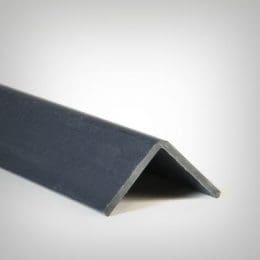
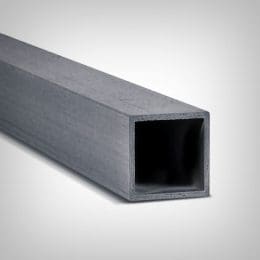
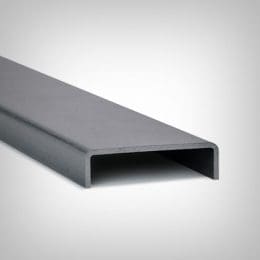
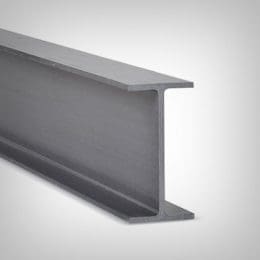
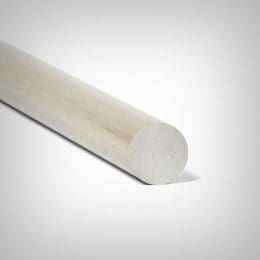
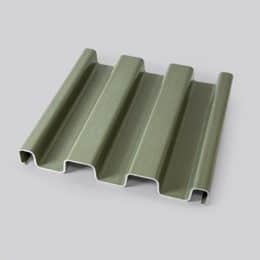
Bedford also provides custom fabrication of pultruded Z-Girts, thermal bridging solutions and cladding attachment systems to improve thermal efficiency and reduce heat loss. All FRP structural shapes can be easily cut, drilled and assembled on-site using standard tools.
What structural shapes options are available?
+Bedford offers a full range of PROForms FRP structural shapes, including standard profiles, specialty shapes and custom pultrusions built to meet unique project specs, including customization options such as molded-in colors, resin choices (including fire-retardant) and fabrication to your dimensions.
Standard Profiles:
Special Order PROForms Structural Shapes:
Details and Specifications:
View the full product range here.
How can I order FRP structural shapes?
+Ordering FRP structural shapes from Bedford is simple and direct. You can:
- Request a quote
- Call our team for assistance at 814-623-8125
- Check current inventory
- Apply for credit
Our team is ready to help you get the right structural shapes for your timeline and application.
What are FRP structural shapes used for?
+FRP structural shapes are used in a wide variety of industries and applications where strength, corrosion resistance and low maintenance are essential. Common uses include frameworks, supports, platforms, walkways and structural components in both new construction and retrofit projects.
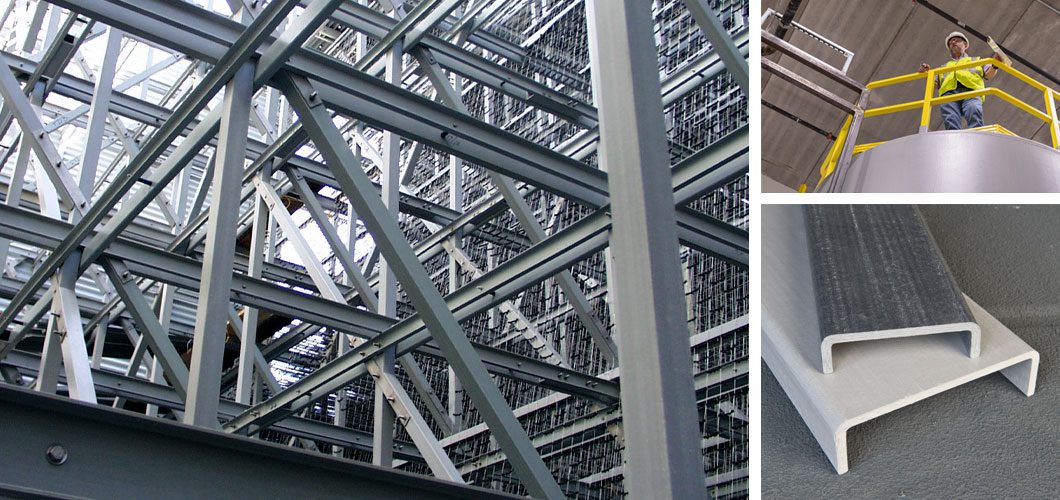
FRP structural shapes are available for numerous applications and configurations in markets such as:
- Aerospace
- Breweries
- Chemical and food processing
- Data centers
- Distribution and warehousing
- Manufacturing
- Metals fabrication
- Mining
- Oil and gas
- Power generation
- Steel mills
- Wastewater and water treatment
Explore these projects to see Bedford FRP solutions used by a wide variety of customers. Your project could be featured in our showcase, too — submit details here!
Check out our article and video to see how our PROForms solutions are built to meet specific needs and withstand the toughest environments.
How are FRP structural shapes made?
+Bedford manufactures FRP shapes and profiles using the pultrusion process — a method that pulls raw materials through a series of precise steps to create a finished product that’s as strong as steel but without the weight, rust or corrosion.
What is pultrusion? The term “pultrusion” comes from combining “pull” and “extrusion.” It’s a continuous manufacturing process that transforms reinforced fibers and liquid resin into lengths of fiberglass-reinforced plastic with a consistent cross-section. During the process, fiberglass rovings are pulled through a resin bath, shaped in a heated die and cured to form strong, lightweight profiles that hold their shape over time.
Breaking it Down: 5 Steps of the Pultrusion Process
Pultruded grating is produced through a continuous, multi-step process that creates strong, consistent bearing bars and cross-rods, which are later assembled into grating panels.
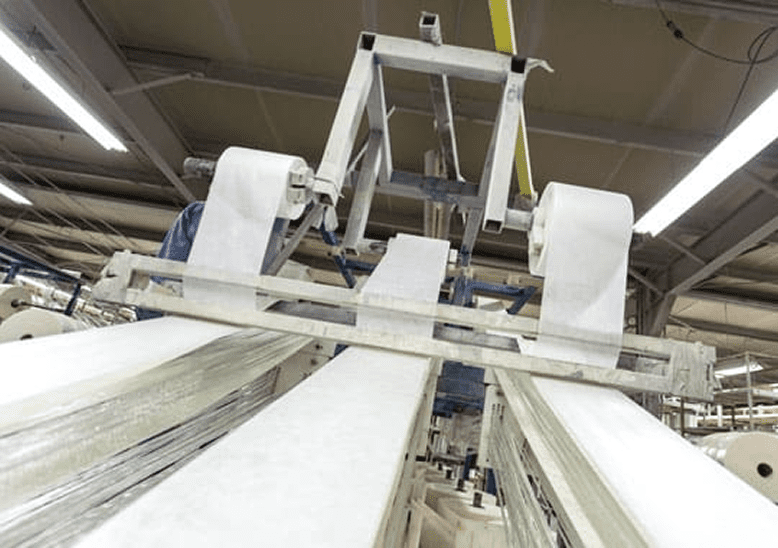
1: Continuous Fiberglass Reinforcement
Rolls of unidirectional roving provide tensile strength along the profile’s length, while continuous filament mat, woven roving or stitch fabric adds transverse strength.
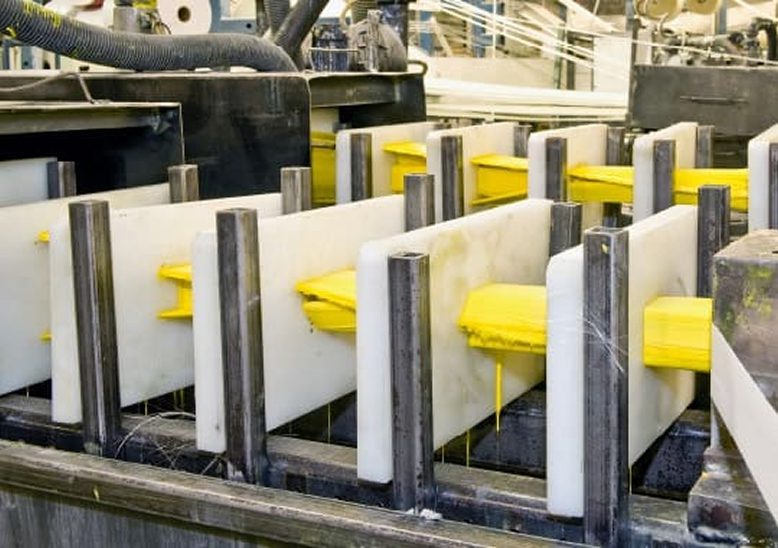
2: Preforming Guides
Material spools and reinforcements pass through guides that begin shaping the raw glass fibers into the desired profile.

3: Impregnation and Resin Bath
Fiberglass is pulled through a resin bath (“wet-out”) containing resins, pigments and catalysts. A surfacing veil is added for a resin-rich, UV- and corrosion-resistant finish.
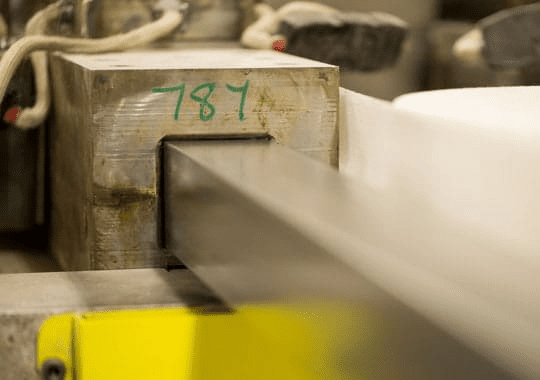
4: Exposure to Heat
Wet-out reinforcements enter a heated pultrusion die, where heat triggers the thermosetting process that cures and hardens the profile.
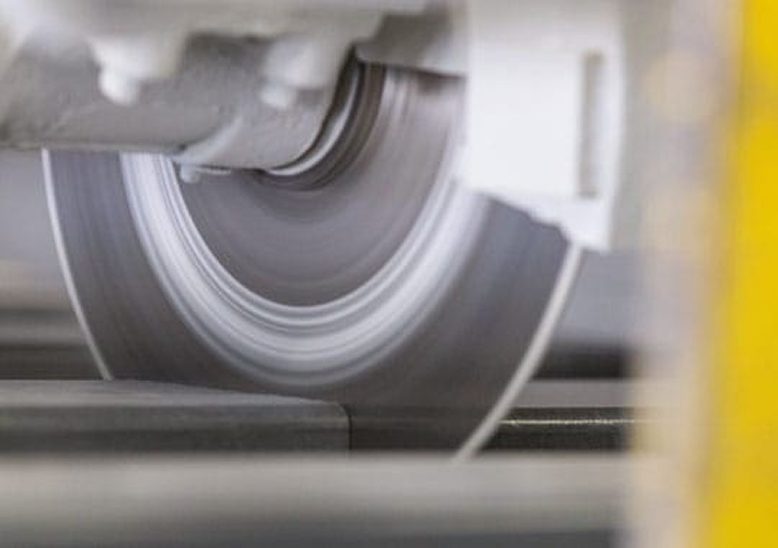
5: Pull Mechanism & Cutting
A caterpillar-style pull system advances the cured profile to a saw, where it’s cut to length, then sent to inventory, fabrication or shipment.
Watch this video to see the Bedford pultrusion process.
What makes FRP structural shapes a popular construction material?
+FRP structural shapes have become a go-to material for construction and industrial projects thanks to their unmatched combination of strength, durability and versatility. Once limited to select industries, FRP is now replacing traditional materials like steel, aluminum and wood in countless applications — offering solutions to challenges those materials can’t easily overcome.
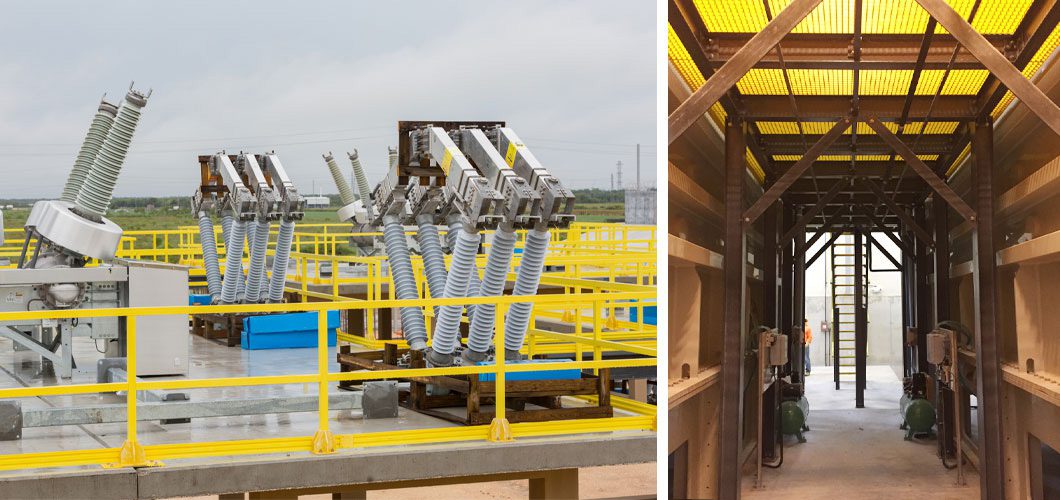
With an exceptional strength-to-weight ratio, FRP shapes are lightweight yet incredibly strong, able to withstand heavy loads without cracking, bending or breaking. They resist corrosion, rot, insect damage and electrical conductivity, making them ideal for environments where moisture, chemicals or high safety demands are factors. And while other materials may fail over time, FRP maintains its performance for decades.
Benefits of PROForms FRP structural shapes:
- Corrosion-resistant and weatherproof
- Strong but lightweight for easier handling
- Fire-retardant and nonconductive for added safety
- Dimensionally stable — won’t warp, swell or bow
- Consistent quality from piece to piece
- Easy to cut, drill and install with standard tools
- Available in multiple color options
All PROForms structural shapes are manufactured through the pultrusion process with a glass content of 45–55% by weight. They’re available in one of the industry’s widest selections — including angles, square tubes, round tubes, channels, beams, rods and baffle panels — with many profiles in stock for fast delivery.
Bedford also integrates PROForms shapes into modular FRP solutions such as platforms, handrails, ladders, stair towers and pedestrian bridges — offering pre-engineered components that are quick to install and built to last.
What advantages come with using FRP over traditional materials?
+Compared to wood, steel and aluminum, Bedford’s FRP offers unmatched durability in harsh, corrosive environments. It won’t rust, rot, warp or dent — and it’s nonconductive, impact resistant and lightweight.
FRP vs. Steel
- Corrosion resistant — won’t rust in harsh weather or chemical exposure
- Strong as steel at just ¼ the weight
- Up to 75% lighter for easier handling and reduced transport costs
- Fabricates easily with standard tools — no welding or cutting torches needed
- Molded-in color and resin options, including fire-retardant
FRP vs. Aluminum
- Won’t corrode or deform on impact
- Nonconductive with low thermal conductivity for better insulation
FRP vs. Wood
- Won’t warp, rot or decay from moisture
- Resistant to corrosion, insects, mold and mildew
- No hazardous coatings or preservatives required for long-term performance
Watch the video below to learn more about how FRP compares.
How does FRP hold up against the elements?
+Bedford’s FRP stands up to the elements by resisting rust, rot, corrosion and moisture damage — even in harsh, chemical or marine environments. It keeps its strength and appearance without the need for heavy maintenance or protective coatings.
Our FRP structural shapes and grating are also:
- Fire-retardant — Meets flame spread rating of 25 or less (ASTM E-84)
- Low conductivity — Safer in electrical applications
- Easy to install — Works with standard tools
From individual panels to complete FRP systems with handrails, stairs and platforms, Bedford delivers solutions — plus in-house services such as design and fabrication support.
See More
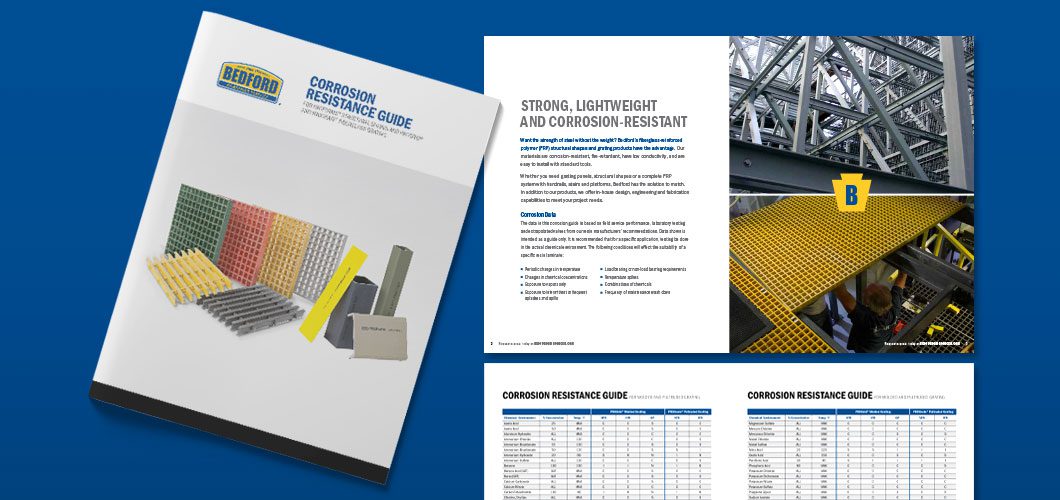
Check out our Corrosion Resistance Guide for detailed performance data. This guide draws from field performance, lab testing and resin manufacturer data. For the best results, test in your actual environment. Factors affecting performance include:
- Temperature changes or spikes
- Chemical concentration shifts
- Vapors, splashes or spills
- Load-bearing vs. non-load-bearing needs
- Wash-down frequency
- Combinations of chemicals
What kind of maintenance does FRP require?
+FRP requires very little maintenance — one of the main reasons it’s chosen over materials like steel or wood. It’s built to withstand harsh conditions without deteriorating over time, which helps lower your total cost of ownership.
Key performance benefits that reduce maintenance needs include:
- Corrosion resistance — won’t rust or rot
- Fire retardance
- Dimensional stability — won’t expand or contract with temperature swings
- No denting or warping
- UV resistance
- Low electrical conductivity
Because of these properties, FRP products typically don’t require painting, coating or frequent inspections.
What is the temperature range/specific heat capacity? And the softening/melting point?
+Performance in high- or low-temperature environments depends on the specific FRP resin system and reinforcement used. Properties such as heat resistance, dimensional stability and thermal limits can vary by product.
For detailed specifications — including temperature range, specific heat capacity and softening or melting points — please consult Bedford’s Corrosion Resistance Guide and Design Guide, which provide testing data and recommendations for various applications.
Is FRP waterproof?
+Yes — FRP stands up well to water. Its low absorption rate means it won’t swell, rot or degrade in damp, wet or humid conditions. For detailed water absorption rates and performance specifications, see Bedford’s Design Guide.
Is FRP fire-rated?
+Yes. Certain Bedford FRP formulas are Class A fire-rated, meaning they have a flame spread index of 25 or less. As specified in our Design Guide, our FRP is rated at 25, meeting the Class A requirement.
What are the specifications for structural shapes?
+You can find complete specs for all our PROForms structural shapes in the Specification Section of the Resources page on our website. This includes details for our baffle panels — a popular product known for its durability and performance.
How are FRP structural shapes installed?
+FRP structural shapes are designed for easy on-site fabrication and installation using basic tools.
To streamline the process, Bedford offers kitted shipments — all parts for a specific segment arrive together, in installation order, so you can get right to work without sorting or searching.
Laser-engraved part numbers match your drawings to ensure the right pieces go in the right places every time.
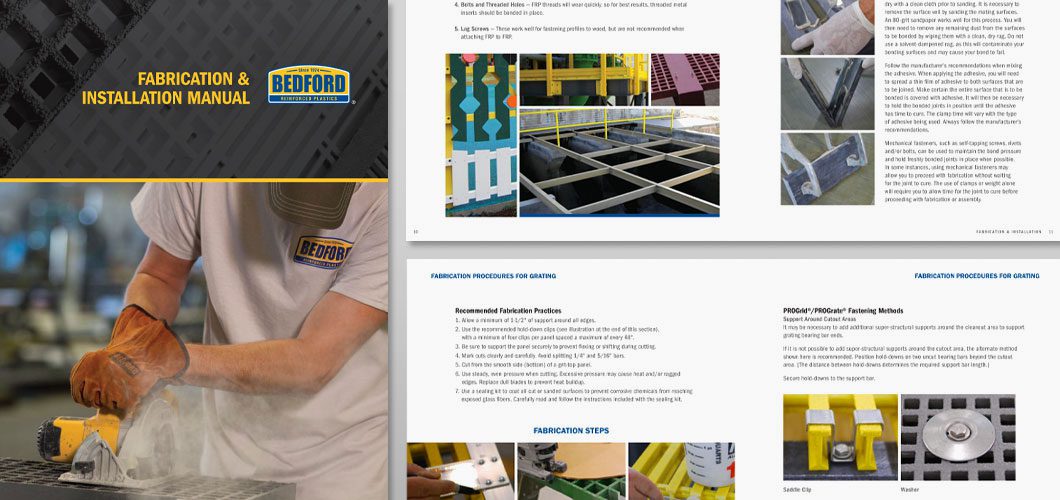
For complete guidance on installation, see our Fabrication & Installation Manual.
Can I order custom sizes or lengths?
+We stock a wide range of standard sizes, but if you need something different, we can help. Many FRP products can be custom-fabricated at our facility, and thanks to FRP’s workability, they’re also easy to cut or modify on-site to fit your exact requirements.
Can you fabricate the material before shipping it?
+Yes. We can fabricate or pre-assemble FRP before shipping to save time on-site. Sections like staircases, platforms or even complete pedestrian bridges can arrive ready for fast installation. Just let us know your requirements, and we’ll make it happen.
What blade should I use to cut FRP shapes to size?
+FRP is easy to cut with standard tools, but for best results we recommend diamond-coated saw blades. Always wear eye, hearing and hand protection. Use light, even pressure to avoid clogging the blade or fraying edges, and support the material to prevent chipping. FRP is abrasive, so clean and sharpen blades frequently. Maintain a steady pace — too fast can fray edges, too slow can overheat the blade. For drilling, brad point or carbide-tip bits work best and will need frequent sharpening.
Watch our short video for a demonstration.
Are structural shapes products available in different colors?
+Yes — Yellow, Green, Gray and Tan.
Choosing the right color can improve visibility, enhance safety or complement your structure’s overall design. With Bedford’s FRP products, the color is built into the material during manufacturing, so it won’t fade, peel or require repainting like coated steel.
You can view available colors at the top of the PROForms product page.
Can you paint FRP?
+Yes, it’s possible, but generally unnecessary. Since FRP comes in multiple built-in color options, you can select the best fit upfront. Integrated color means lasting performance without the maintenance of repainting.
What is the cost of FRP structural shapes?
+The cost of FRP structural shapes depends on several factors, including the type of shape (angles, channels, beams, etc.), resin series, dimensions, color and quantity needed. Project-specific requirements such as cut-to-size lengths, drilling or special coatings may also affect pricing.
To get accurate pricing tailored to your project, reach out to our team for a customized quote.
What other products does Bedford offer?
+In addition to FRP structural shapes, Bedford offers a wide range of FRP products designed for strength, safety and long service life in industrial and commercial environments.
Molded and Pultruded Grating
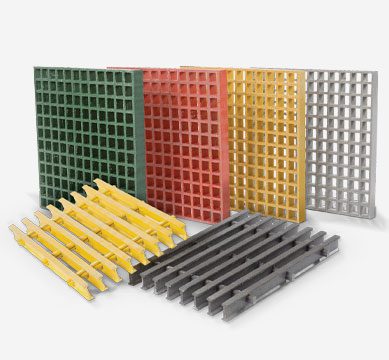
Bedford’s FRP grating is available in both molded and pultruded styles, giving you options for strength and performance. Molded grating provides excellent corrosion resistance and slip resistance in demanding environments, while pultruded grating delivers higher load capacity and stiffness for structural applications. Both are lightweight, durable alternatives to steel and aluminum, and they’re easy to install and maintain.
Modular FRP Solutions
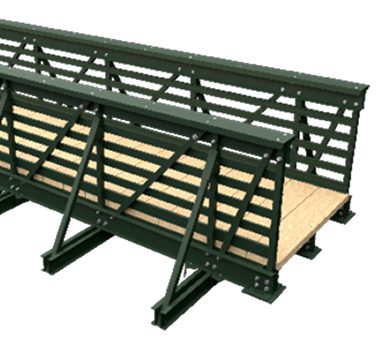
Bedford’s pedestrian bridges are strong, lightweight and built to last. Designed for pedestrian, equestrian and light vehicle use, these modular bridges are available in spans up to 100′ long and 10′ wide. They install quickly, require minimal maintenance and meet strict OSHA safety standards — making them ideal for both urban and remote applications.